



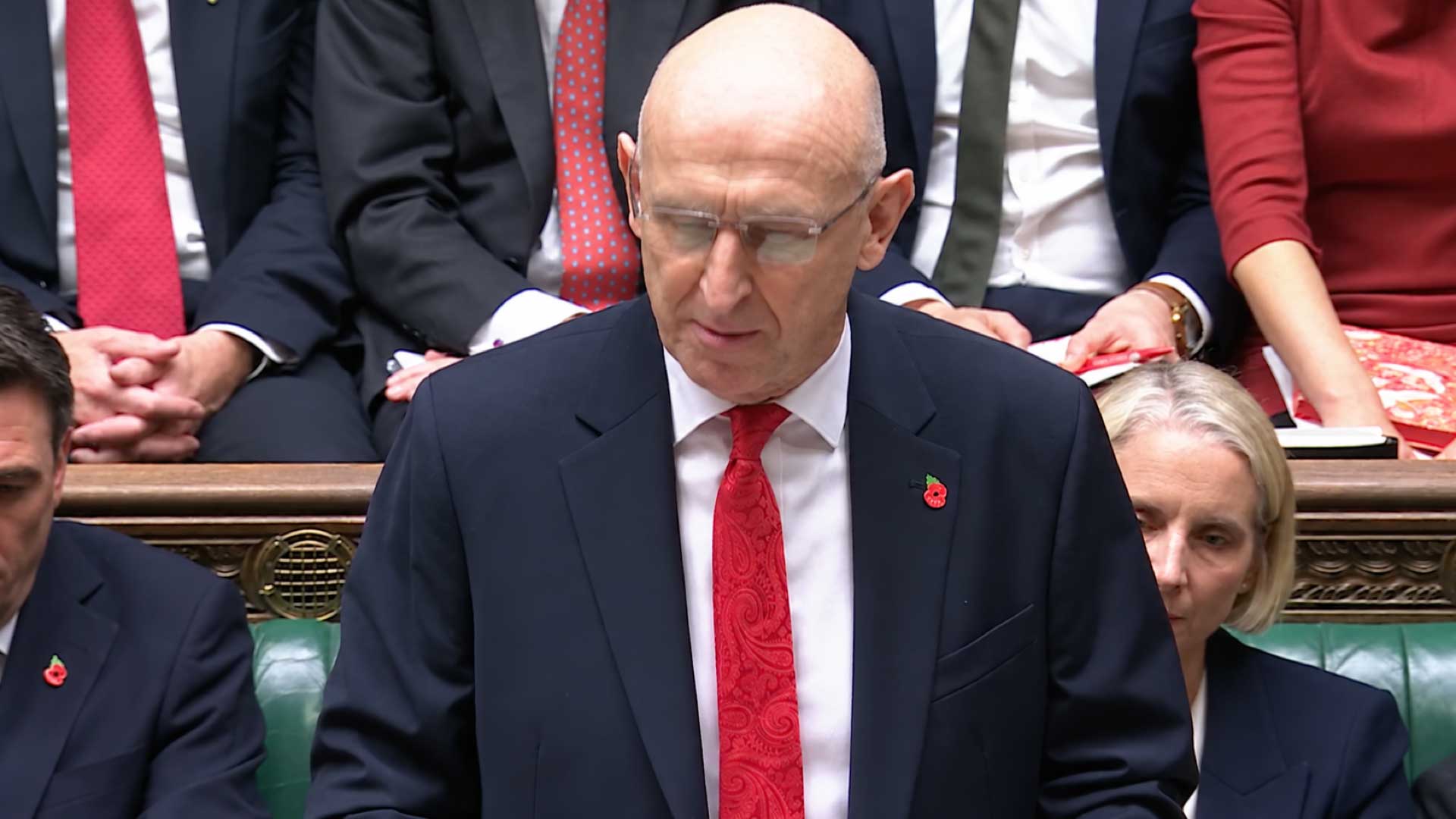
Healey meets fiscal rules as banks and gambling fund Budget support
October 28 2026
Chancellor John Healey today said his first Budget met the government’s fiscal rules, with headroom against the stability rule of £15bn in 2029-30, rising to £22bn in 2030-31, according to the Office for Budget Responsibility.
Healey told MPs he had kept Labour’s manifesto promise not to raise tax on working people and had rejected broad-based tax rises, with 88 per cent of people paying no more tax this year.
Forecasts
The OBR has upgraded its growth forecast for this year to 1.2 per cent, followed by 1 per cent next year and 1.6 per cent in 2028, Healey said. Borrowing is forecast to fall from 4.2 per cent of GDP this year to 1.8 per cent in 2030-31.
The OBR also expects the government to spend £14bn more on debt interest this year, which Healey linked to the war in the Middle East. Borrowing beat OBR forecasts in June, the month before he took office.
Tax changes
Banks will pay an extra 3 per cent on the Bank Surcharge for 15 months from January to fund support on energy bills. Machine Games Duty will rise from 20 per cent to 25 per cent on higher-stakes machines to pay for business rates support.
Tax on income from property and savings will rise by a further two percentage points from April 2027, with no change to tax on dividends or employment income.
The lifetime limit for Business Asset Disposal Relief will be cut from £1m to £500,000, while a new Founders Relief will charge 10 per cent on lifetime gains of up to £10m.
The cash ISA limit will stay at £20,000 a year rather than being cut, a new Starter ISA will be created for first-time investors, and a first-time buyer ISA will replace the Lifetime ISA.
Business measures
The small business rate relief threshold for retail, hospitality and leisure firms rises from £12,000 to £18,000, and a British Industrial Competitiveness Scheme will take 25 per cent off electricity bills for 10,000 industrial firms from April.
The National Minimum Wage and National Living Wage will rise by 3.9 per cent. The trading allowance triples to £3,000, and the National Wealth Fund and British Business Bank receive a further £20.4bn.
Reaction
Nimesh Shah, chief executive of audit, tax and business advisory firm Blick Rothenberg, said: “The reduction in the limit to Business Asset Disposal Relief to £500,000 makes little sense and John Healey should have just abolished it completely. It will now be worth a measly £30,000.”
Shah said the further increases to income tax on savings and property income would make family investment companies and offshore bonds even more popular.
He described the decision to keep the £20,000 cash ISA limit as very positive, but said he wished Healey had raised the overall ISA limit, which has been frozen for almost 10 years.